Table of Contents
Key Takeaways
- AI trainers excel at data-driven programming, real-time form correction, and cost savings, but lack emotional support and hands-on spotting.
- Human coaches provide superior injury prevention, nuanced technique adjustment, and motivational accountability, especially for advanced or injured lifters.
- A hybrid model—using AI for daily workouts and a human coach for periodic reviews—offers the best balance of affordability and expertise.
- AI form detection is accurate for compound lifts (92%) but less reliable for complex movements (78%), making human oversight valuable for technical lifts.
- Data privacy differs: AI apps store your biometric data and videos, while human coaches rely on personal trust and professional confidentiality.
How AI Personal Trainers Function
An AI personal trainer uses machine learning algorithms to analyze your workout data, adjust exercise parameters, and provide real-time feedback through a smartphone or wearable device. These systems typically track metrics such as rep speed, range of motion, heart rate, and rest intervals. For example, an AI trainer might detect that your squat depth decreased by 15% during set 4 and automatically reduce the load by 5 kg for the next set. Most platforms also log historical performance to suggest progressive overload—increasing weight by 2.5 kg every two weeks when you complete all prescribed reps with proper form.
The core advantage lies in 24/7 availability and data-driven adjustments. Unlike a human coach who can only observe you during scheduled sessions, an AI can monitor every repetition across multiple workouts and identify patterns you might miss. This continuous feedback loop allows for micro-adjustments in real time, such as shortening rest periods from 90 seconds to 60 seconds when your heart rate recovery indicates readiness.
Accuracy of Form Correction
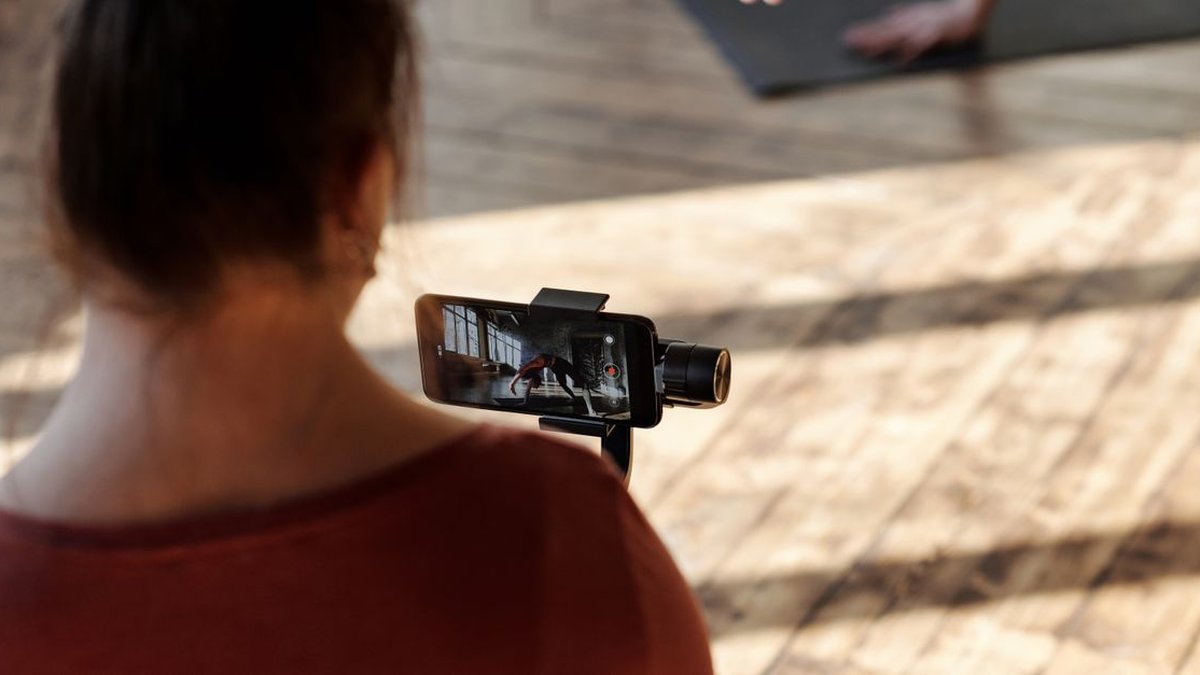
AI form correction relies on computer vision—your phone camera or a depth-sensing camera (like those in newer smart mirrors) captures your movement and compares it against a biomechanical model. For a barbell bench press, the system checks that your elbows are at a 75-degree angle relative to your torso, that the bar path traces a slight curve from your sternum to your shoulders, and that your feet remain flat. If your left wrist extends beyond 15 degrees, the AI will pause the set and display a correction prompt.
However, these systems have limitations. They cannot feel muscle tension or detect subtle compensations—like a slight hip shift during a single-leg Romanian deadlift—that a human coach would spot by touch or observation. A study from 2024 found that AI form detection had 92% accuracy for major compound lifts (squat, bench, deadlift) but dropped to 78% for complex multi-joint movements like the clean and jerk. For most recreational lifters, this level of accuracy is sufficient to prevent common injuries, but advanced athletes may need the nuanced eye of a coach.
Motivation and Emotional Support
One of the most frequently cited drawbacks of AI trainers is their inability to provide genuine emotional support. A human coach reads your body language, hears the hesitation in your voice, and knows when to push you harder or back off. For example, if you failed a 1-rep max attempt at 120 kg, a good coach will immediately offer a tactical adjustment—drop to 110 kg for a triple—and then follow up with encouragement. An AI will simply log the failure and suggest deloading by 10% for the next session.
That said, AI systems are improving in this area. Some apps now use natural language processing to deliver motivational messages based on your workout history. After a tough leg day, you might receive: “You completed 4×8 squats at 80 kg—that’s 6% more volume than last week. Your consistency is building strength.” While this is data-driven, it lacks the empathy of a human. For many users, especially those new to fitness, the relationship with a coach provides accountability that an algorithm cannot replicate.
Cost Comparison and Accessibility
AI personal trainers are significantly cheaper than human coaches. A typical AI subscription ranges from $15 to $40 per month, whereas in-person coaching costs $60–$150 per session or $200–$500 per month for remote coaching. Over a year, an AI trainer might cost $300, while a human coach could easily exceed $3,000. This price gap makes AI accessible to a wider audience, including students, shift workers, and individuals in rural areas with limited gym access.
However, lower cost does not always mean better value. If you have specific medical conditions (e.g., patellar tendinopathy, scoliosis) or advanced powerlifting goals, the personalized programming from a human coach—who can palpate your muscles, adjust technique in real time, and modify exercises based on your unique anatomy—may justify the higher expense. For general fitness, weight loss, or maintenance, an AI trainer can deliver 80% of the results at 20% of the cost.
Safety and Injury Prevention
Safety is a primary concern when comparing AI to human coaches. A human coach can physically spot you during heavy lifts, intercept a failing rep, and adjust your setup before you load the bar. AI trainers rely on pre-programmed safety protocols: they might cap your load at 90% of your estimated 1-rep max, enforce a minimum rest of 2 minutes for heavy sets, or stop the session if your heart rate exceeds 180 bpm for more than 30 seconds. These rules are effective for the average user but cannot account for acute injuries—like a sudden shoulder impingement mid-press.
For exercises requiring spotters, such as the barbell bench press or heavy back squat, AI cannot replace a human spotter. Some AI platforms have attempted to address this by incorporating “bail-out” cues (e.g., telling you to dump the bar during a squat), but this is not comparable to a coach catching a failing rep. If you train alone with an AI trainer, it is strongly recommended to use safety bars, power racks, or an adjustable bench with spotter arms.
Data Privacy and Customization
AI trainers collect vast amounts of personal data: your body metrics (weight, body fat percentage, lean mass), workout history, heart rate variability, sleep patterns, and even video recordings of your form. This data is essential for personalization—the AI uses it to adjust your training load, predict recovery needs, and suggest deload weeks. For example, if your heart rate variability drops by 10% over three days, the system might reduce your training volume by 20% that week.
However, data privacy is a legitimate concern. You must review the app’s data policy to understand how your information is stored, shared, or sold. Some platforms encrypt data end-to-end, while others may anonymize and sell aggregated trends to research institutions. A human coach, by contrast, keeps your information confidential through a personal relationship and professional ethics. If you are uncomfortable with your workout videos being stored on a cloud server, a human coach may be the safer choice.
Hybrid Models: Best of Both Worlds
Many fitness professionals now advocate for a hybrid approach: use an AI trainer for daily workout programming, form feedback, and data tracking, but schedule monthly or bi-weekly sessions with a human coach for technique refinement, injury assessment, and motivational check-ins. For instance, you might follow an AI-generated program for 4 weeks, then meet with a coach to review your squat video, adjust your foot stance, and test your 1-rep max. This combination gives you the cost savings and convenience of AI with the expertise and accountability of a human.
“The most effective clients I work with use AI as their daily assistant and me as their strategic advisor. I can correct one subtle hip shift that an AI might miss, while the AI keeps them consistent on the other 27 days of the month.”
This model also allows the human coach to focus on what they do best: adjusting for mental fatigue, celebrating non-scale victories, and providing the emotional support that no algorithm can truly replicate. For most people, this hybrid setup offers the highest return on investment for both time and money.
Frequently Asked Questions
Common questions about fitness tech and apps
Can an AI trainer correct my form as well as a human coach?
AI trainers use computer vision to detect major form errors—like knee valgus or rounded back—but cannot feel muscle tension or spot subtle compensations. For basic lifts, AI accuracy is around 92%, but human coaches can identify nuanced issues like asymmetrical loading or poor bracing patterns.
Is an AI personal trainer safe for heavy lifting?
AI trainers can program safe loads (e.g., capping at 90% of your estimated 1-rep max) and enforce rest intervals, but they cannot physically spot you. For exercises like the bench press or back squat, you should use safety bars or a power rack, and consider a human spotter for maximal efforts.
How much does an AI trainer cost compared to a human coach?
AI subscriptions typically cost $15–$40 per month, while human coaching ranges from $60–$150 per session or $200–$500 per month. Over a year, AI is about $300, whereas human coaching can exceed $3,000, making AI far more accessible for budget-conscious users.
Can I switch between an AI trainer and a human coach during my training?
Yes, many fitness platforms allow you to export your workout data (sets, reps, weights, heart rate) so a human coach can review your progress. A hybrid model—AI for daily workouts and a human coach for monthly technique checks—is increasingly common and effective.
Related Articles
Start Today
AI personal trainers are powerful tools for data-driven programming, form correction, and cost-effective fitness guidance, but they cannot fully replace the intuition, emotional support, and hands-on safety of a human coach. For most people, the optimal path is a hybrid approach: let AI handle the daily details while relying on a human coach for technique refinement, injury prevention, and motivational accountability. Your choice should ultimately depend on your goals, budget, training experience, and comfort with sharing biometric data.