Table of Contents
Key Takeaways
- Tabata uses 20 seconds of maximal effort followed by 10 seconds of rest for 8 rounds, totaling 4 minutes.
- It improves both aerobic and anaerobic systems, with studies showing 9-12% VO₂ max gains in 6 weeks.
- Use bodyweight or light implements to maintain form; increase resistance only after mastering technique.
- Limit Tabata sessions to 2-3 per week with at least 48 hours recovery between sessions.
- Track total reps or output each week to ensure progressive overload and avoid stagnation.
What Is the Tabata Protocol?
The Tabata protocol is a form of high-intensity interval training (HIIT) structured around a precise work-to-rest ratio. Developed by Dr. Izumi Tabata at the National Institute of Fitness and Sports in Tokyo, the original study compared moderate-intensity steady-state cycling to a 4-minute protocol of 20 seconds of all-out effort followed by 10 seconds of rest, repeated 8 times. Results showed that the Tabata group improved both anaerobic and aerobic capacity significantly more than the steady-state group, in less than one-quarter of the time.
This method demands maximal effort during each 20-second work interval. You cannot pace yourself. The goal is to accumulate as many repetitions or as much distance as possible in each burst, then recover for 10 seconds before repeating. The total session duration is exactly 4 minutes, not including a warm-up and cool-down. For most athletes, that 4-minute window is brutally effective at improving VO₂ max and lactate threshold.
“The best training program is the one you actually follow. Consistency trumps perfection every single time.”
Why Four Minutes Works So Well
The magic of Tabata lies in the metabolic stress it creates. During each 20-second all-out interval, your body relies primarily on the phosphocreatine and glycolytic energy systems. The 10-second rest is just enough to partially replenish phosphocreatine stores, allowing you to repeat high-intensity output. Over the 8 rounds, your heart rate remains elevated near maximum, driving adaptations in stroke volume and capillary density.
A 2020 meta-analysis published in the Journal of Sports Sciences found that Tabata-style training improved VO₂ max by an average of 9-12% over 6-week interventions. The protocol also increases the activity of oxidative enzymes, meaning your muscles become more efficient at using oxygen during sustained efforts. This directly translates to better performance in sports like CrossFit, sprinting, and combat athletics.
Essential Equipment and Setup
You can perform Tabata intervals with bodyweight exercises, kettlebells, a rower, an assault bike, or a barbell. The key requirement is that the movement allows you to produce maximal effort safely. For beginners, bodyweight squats, burpees, or battle ropes work well. Advanced athletes can use thrusters with 95 lb (43 kg) for men or 65 lb (29 kg) for women, or kettlebell swings with a 24 kg (53 lb) bell.
“Progressive overload is the engine of all strength gains. Small, measurable increases each session add up faster than you think.”
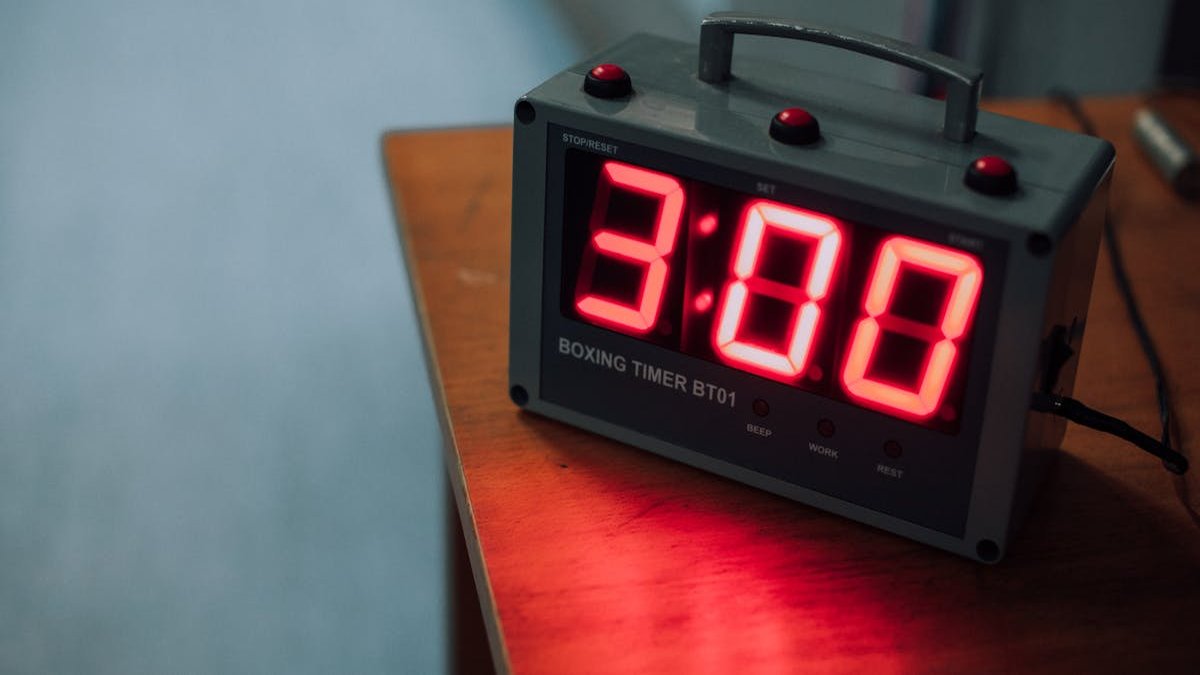
Set a timer that beeps at 20 seconds and 10 seconds. Many free apps have a Tabata preset. Always warm up for 5-8 minutes with dynamic stretching and light cardio. A proper warm-up increases blood flow to working muscles and reduces injury risk. After the 4-minute protocol, cool down with 5 minutes of light jogging and static stretching.
Sample Tabata Workout Table
The following workout uses air squats and push-ups in alternating rounds. Perform each exercise for 20 seconds at maximal effort, rest 10 seconds, then switch. Complete 8 rounds total.
| Round | Exercise | Work (sec) | Rest (sec) | Target Reps |
|---|---|---|---|---|
| 1 | Air Squats | 20 | 10 | 12-15 |
| 2 | Push-Ups | 20 | 10 | 8-12 |
| 3 | Air Squats | 20 | 10 | 12-15 |
| 4 | Push-Ups | 20 | 10 | 8-12 |
| 5 | Air Squats | 20 | 10 | 12-15 |
| 6 | Push-Ups | 20 | 10 | 8-12 |
| 7 | Air Squats | 20 | 10 | 12-15 |
| 8 | Push-Ups | 20 | 10 | 8-12 |
Record your total reps for each exercise. Aim to beat that number in your next session. For progression, increase the resistance (e.g., goblet squats with a 35 lb / 16 kg dumbbell) or add a second Tabata block after 2 minutes of rest.
Common Mistakes and How to Fix Them
The most frequent error is treating Tabata as a moderate-intensity workout. If you can hold a conversation during the 20-second intervals, you are not working hard enough. Your perceived exertion should be 9 or 10 out of 10. Conversely, beginners often sacrifice form to chase reps. Maintain a neutral spine, full range of motion, and controlled tempo. One bad rep can lead to injury that sidelines you for weeks.
Another mistake is doing Tabata too frequently. Because it is extremely taxing on the central nervous system, schedule no more than 2 to 3 Tabata sessions per week, with at least 48 hours between them. Pair it with lower-intensity steady-state cardio or strength training on alternate days. Overtraining signs include persistent fatigue, decreased performance, and disturbed sleep.
Programming Tabata Into Your Week
For CrossFit athletes, Tabata can replace a metcon or serve as a finisher. A sample week might look like this:
- Monday: Strength work (e.g., back squat 5x5 at 80% 1RM) + Tabata rower (8 rounds, max calories)
- Wednesday: Gymnastics skill work + Tabata kettlebell swings (24 kg, 8 rounds)
- Friday: Olympic lifting (e.g., clean and jerk 3x3 at 75% 1RM) + Tabata burpees (8 rounds)
You can also use the Tabata protocol as a standalone workout when time is limited. One 4-minute block is effective, but advanced athletes may complete two blocks with a 2-minute rest between. Do not exceed three blocks in a single session. Track your total output (reps, calories, meters) each week to measure progress.
Frequently Asked Questions
Common questions about hiit and crossfit
Can I do Tabata every day?
No. The protocol is extremely demanding on the central nervous system and muscles. Performing it daily increases injury risk and leads to overtraining. Stick to 2-3 sessions per week with rest days in between.
What exercises work best for Tabata?
Compound movements that engage multiple muscle groups are ideal. Air squats, burpees, kettlebell swings, rowing, assault bike sprints, and thrusters all work well. Avoid single-joint isolation moves like bicep curls.
How do I progress with Tabata training?
Increase the resistance (e.g., go from bodyweight squats to goblet squats with a 35 lb dumbbell) or add a second 4-minute block after 2 minutes of rest. You can also reduce rest between blocks to 90 seconds. Track total reps each session.
Is Tabata safe for beginners?
Yes, if you start with low-impact exercises like stationary cycling or bodyweight squats and focus on form. Begin with 4 rounds instead of 8 for your first week. Stop immediately if you feel sharp pain or dizziness.
Related Articles
Start Today
The Tabata protocol is a scientifically validated method to rapidly improve cardiovascular conditioning in just four minutes per session. By demanding maximal effort in short, repeatable bursts, it forces your body to adapt at a cellular level. Use the sample workout table to start, track your output, and progress gradually. Consistent application of this protocol will raise your work capacity and performance ceiling far beyond what steady-state training can achieve.